
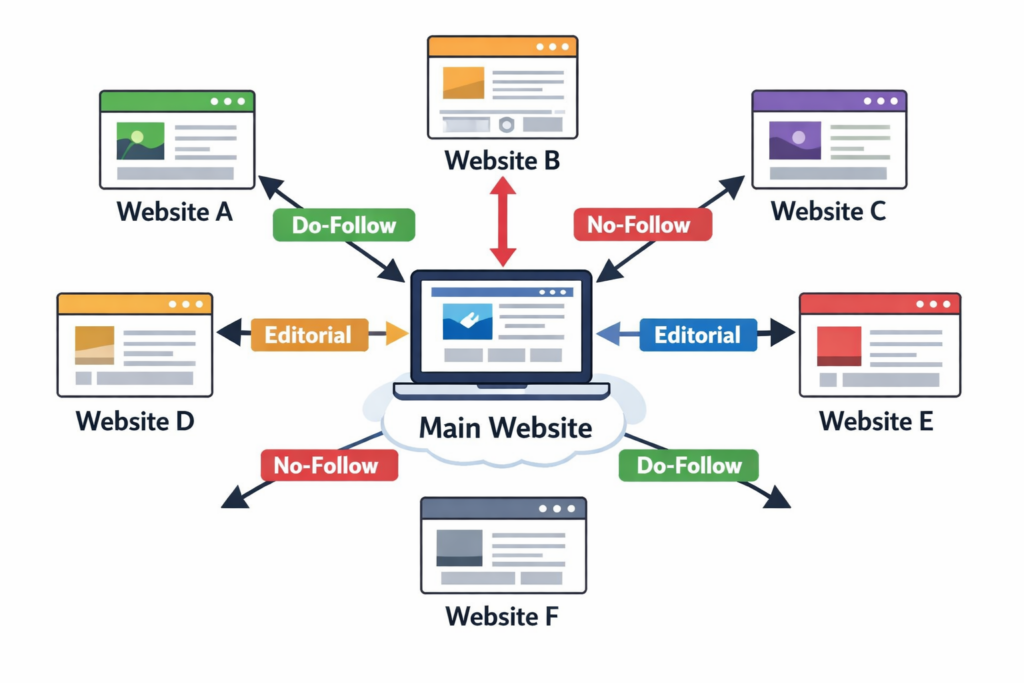
If you have ever read anything about SEO, you have probably come across the word backlinks. Everyone talks about them. Everyone says you need them. But what most beginner guides miss is that not all backlinks are the same.
Some backlinks can push your website to the top of Google. Others do absolutely nothing. And a few can actually get your website penalised.
So before you start building links, it is important to understand what types of backlinks exist in SEO, which ones genuinely help, and which ones you should stay far away from.
That is exactly what this guide covers.
What Is a Backlink ?
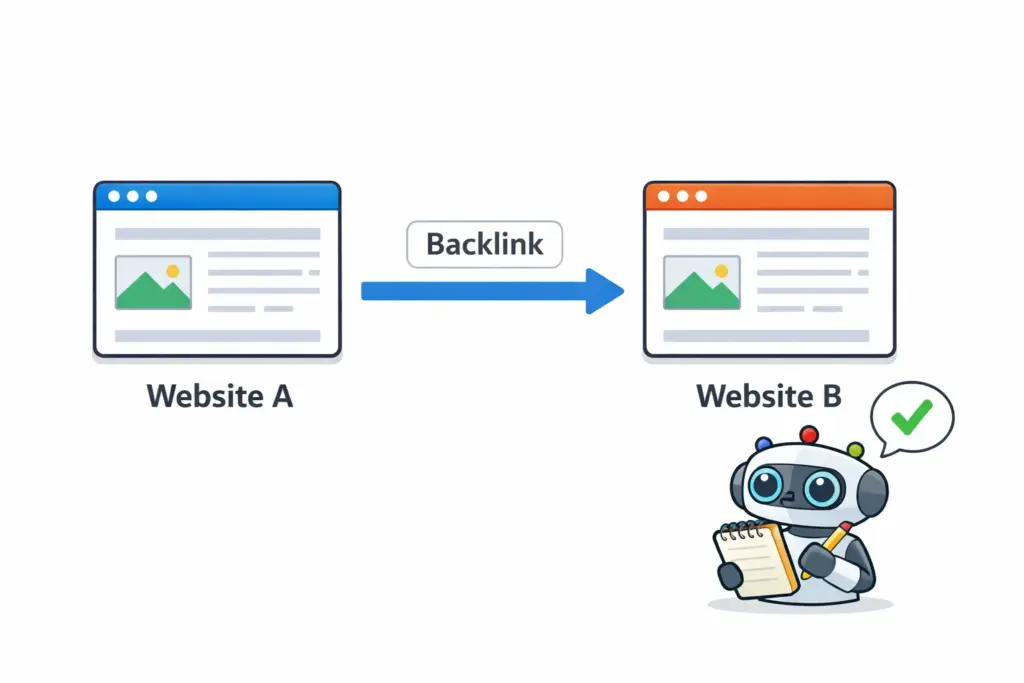
A backlink is simply a link from one website to another. When Website A links to Website B, Website B receives a backlink from Website A.
Google treats backlinks like votes of confidence. If many credible websites are linking to your page, Google assumes your content must be valuable and trustworthy. This is one of the biggest reasons backlinks remain one of the most important ranking factors in SEO even today.
But here is the thing: the quality, type, and source of those backlinks matter far more than the number. One link from a respected industry website will do more for your rankings than a hundred links from random, unrelated blogs.
Key Points At A Glance
- Backlinks are links from other websites pointing to yours and they act as votes of trust in Google’s eyes.
- Do-follow backlinks pass SEO value. No-follow backlinks do not, but they still have their place.
- Editorial backlinks are the most valuable type you can earn.
- Toxic or spammy backlinks can hurt your website’s rankings.
- The quality of backlinks always matters more than the quantity.
- Understanding backlink types is a core skill for any SEO professional or digital marketer.
Types of Backlinks: Quick Overview
| Type of Backlink | Passes SEO Value? | Difficulty to Get | Value |
|---|---|---|---|
| Do-Follow | Yes | Medium to High | Very High |
| No-Follow | No (directly) | Low to Medium | Medium |
| Editorial | Yes | Very High | Highest |
| Guest Post | Yes | Medium | High |
| Directory | Varies | Low | Low to Medium |
| Forum / Comment | Usually No | Low | Very Low |
| Sponsored / Paid | No (marked) | Varies | Low |
| Social Media | No | Low | Indirect |
Now let us go through each type in detail.
1. Do-Follow Backlinks
A do-follow backlink is the standard type of link that passes SEO value from one website to another. When a credible website gives you a do-follow link, it is essentially sharing a portion of its authority with your page.
This SEO value that gets transferred is commonly referred to as link juice. The more do-follow links you earn from high-authority, relevant websites, the stronger your website’s overall domain authority becomes.
What makes a do-follow backlink powerful?
• It comes from a website with high domain authority.
• The linking website is relevant to your niche or industry.
• The link is placed naturally within the content body, not hidden in a footer or sidebar.
• The anchor text is descriptive and relevant to the page being linked.
Do-follow backlinks are what most SEO professionals focus on when building a link profile. But earning them ethically takes time, effort, and genuinely good content.
2. No-Follow Backlinks
A no-follow backlink contains a small piece of code (rel=”nofollow”) that tells search engines not to pass SEO value through the link. Technically, they do not directly improve your rankings the way do-follow links do.
But that does not mean they are useless.
No-follow links still bring real traffic to your website. They contribute to a natural-looking backlink profile, which is something Google actually looks for. A website that only has do-follow links from perfectly relevant sources can look suspicious. A healthy mix of do-follow and no-follow links looks far more organic.
Where no-follow links commonly appear:
• Wikipedia links (all external links are no-follow)
• Social media platforms like Twitter, Facebook, and LinkedIn
• Blog comments
• Press release websites
• Many news websites and forums
Do not ignore no-follow links. They play a supporting role in a well-rounded link building strategy.
3. Editorial Backlinks
Editorial backlinks are the gold standard of link building. These are links that other websites give you purely because your content is genuinely valuable, credible, or useful to their readers.
Nobody paid for them. Nobody reached out asking for them. The website simply chose to link to your content because it deserved to be linked.
These links tend to come from news websites, industry blogs, research publications, and authoritative sources in your niche. Because they are earned rather than built, Google trusts them far more than links acquired through outreach or directories.
How to earn editorial backlinks:
• Publish original research, surveys, or data that others want to reference.
• Write genuinely comprehensive guides that become go-to resources in your industry.
• Create tools, calculators, or templates that are too useful not to share.
• Get featured in press coverage or industry roundup articles.
Editorial backlinks take the most effort to earn but they deliver the highest long-term value for your SEO.
4. Guest Post Backlinks
Guest post backlinks come from articles you write and publish on other websites in exchange for a link back to your own site. This is one of the most widely used link building strategies in digital marketing.
When done right, guest posting benefits both sides. The host website gets quality content. You get a backlink and exposure to a new audience.
What makes a guest post backlink worth it:
• The host website is in the same or a related industry as yours.
• The website has real traffic and a genuine audience, not just a high domain authority score.
• The link is placed naturally within the article content, not just in an author bio.
• The content you write is genuinely helpful, not just a thin article created purely for the link.
Be cautious of websites that exist purely to sell guest post spots. Google is aware of these practices and links from low-quality guest post farms carry very little value.
5. Directory Backlinks
Directory backlinks come from online business directories that list your website along with your business information. Think of platforms like Justdial, Sulekha, IndiaMart, or international ones like Yelp and Yellow Pages.
These links are relatively easy to get and they are genuinely useful for local SEO. Making sure your business is consistently listed with the same name, address, and phone number across directories sends strong local trust signals to Google.
However, not all directories are equal. Listing your website on hundreds of random, low-quality directories just to get backlinks can actually hurt you. Focus on reputable, niche-relevant directories that real users actually visit.
6. Forum and Comment Backlinks
These are links that appear in forum discussions, community threads, or blog comment sections. Most of them are no-follow, meaning they pass no direct SEO value.
Participating in communities like Reddit, Quora, or niche forums can still be worthwhile if your contribution is genuinely helpful and your link adds real context. But dropping links in comment sections purely for SEO purposes is considered spammy and can damage your website’s reputation.
The rule here is simple: only link when it actually helps the conversation.
7. Sponsored and Paid Backlinks
Sponsored backlinks are links you pay for. Google requires that any paid link be marked with a rel=”sponsored” or rel=”nofollow” tag so it is transparent to search engines that the link was purchased rather than earned.
Buying links without disclosing them as paid is a direct violation of Google’s guidelines and can result in a manual penalty. If you ever come across someone offering to sell you backlinks with the promise of guaranteed rankings, treat it as a serious red flag.
8. Social Media Backlinks
Links shared on social media platforms like Instagram, LinkedIn, Twitter, and Facebook are almost always no-follow. So they do not pass direct SEO value.
But social media backlinks still matter indirectly. When your content gets shared widely, more people discover it, visit your website, and sometimes link to it from their own blogs or websites. That secondary effect is where the real SEO value comes from.
Good Backlinks vs Toxic Backlinks
Not every backlink is a welcome one. Some links can actively harm your website’s performance in search results. These are called toxic backlinks.
| Good Backlink | Toxic Backlink |
|---|---|
| From a relevant, trusted website | From spammy or unrelated websites |
| Earned through quality content | Bought in bulk from link farms |
| Natural anchor text | Over-optimised, repetitive anchor text |
| Placed within the content body | Hidden in footers, sidebars, or widgets |
| Do-follow from authority sites | From penalised or de-indexed domains |
If your website has toxic backlinks pointing to it, you can use Google Search Console to identify them and submit a disavow file asking Google to ignore those links.
How Backlinks Fit Into Off-Page SEO
Backlinks are the foundation of Off-Page SEO. While On-Page SEO focuses on what is inside your website, Off-Page SEO is all about what happens outside it — and backlinks are the biggest signal of all.
If you want to understand how On-Page and Off-Page SEO work together as a complete strategy, our blog on On-Page vs Off-Page SEO is a great next read.
And if you want to go even deeper into how technical elements like structured data complement your backlink strategy, check out our guide on What Is Schema Markup? A Simple Guide for Beginners.
Final Thoughts
Backlinks are one of the most powerful ranking signals in SEO but only when they are the right kind. Understanding the difference between a do-follow link from an authoritative site and a spammy comment link is what separates a strategic SEO approach from one that wastes time or causes damage.
The goal is not to collect as many backlinks as possible. The goal is to earn the kind of backlinks that genuinely reflect your website’s credibility and relevance.
If you want to learn how to build a complete SEO strategy that includes backlink building, keyword research, on-page optimisation, and much more, the Advanced Digital Marketing Course at Prodigiter gives you hands-on training inside a real agency environment so you graduate with skills that actually get you hired.
Frequently Asked Questions
1. How many backlinks do I need to rank on Google?
There is no fixed number. It depends entirely on your industry, competition, and the quality of the backlinks. One strong editorial backlink from a highly trusted website can outweigh hundreds of low-quality directory links. Focus on quality over quantity every time.
2. Are no-follow backlinks completely useless for SEO?
Not at all. While no-follow links do not directly pass SEO value, they contribute to a natural backlink profile, drive real referral traffic, and increase brand visibility. A healthy link profile includes both do-follow and no-follow links.
3. Can bad backlinks hurt my website?
Yes. Toxic backlinks from spammy, irrelevant, or penalised websites can negatively impact your rankings. If you notice a sudden drop in traffic, a backlink audit is always a good starting point. You can disavow harmful links using Google Search Console.
4. What is the best type of backlink to get?
Editorial backlinks are the most valuable because they are earned naturally based on the merit of your content. Do-follow links from high-authority websites in your niche come a close second. Guest post backlinks from genuinely relevant, high-traffic websites are also a strong option.
5. Is buying backlinks safe?
No. Buying backlinks without marking them as sponsored is against Google’s guidelines and can result in a manual penalty that is very difficult to recover from. Always focus on earning backlinks through genuine content, outreach, and relationship building.